
Can Breast Cancer Come Back? Understanding Recurrence and Follow-Up Care

Completing breast cancer treatment is an important milestone, but many patients and families continue to have one question in mind: “Can breast cancer come back?” The answer is yes. Breast cancer can recur after treatment, sometimes within the first few years and, in some cases, many years later. However, recurrence does not happen to everyone, and an individual’s risk depends on several factors related to the original cancer and its treatment. Understanding what breast cancer recurrence means, knowing which changes should be discussed with a doctor, and following a personalised follow-up plan can help patients stay informed about their health after treatment. What Is Breast Cancer Recurrence? Breast cancer recurrence means that breast cancer has returned after a period when there were no detectable signs of the disease following treatment. Recurrence can occur in different parts of the body and is generally classified as local, regional, or distant recurrence. A local recurrence occurs in the same breast, near the original tumour, or around the surgical site or chest wall, depending on the type of surgery previously performed. A regional recurrence occurs in nearby lymph nodes, such as lymph nodes under the arm or around the collarbone or neck. A distant recurrence, also called metastatic breast cancer, occurs when cancer returns in parts of the body outside the breast and nearby lymph nodes. Common sites can include the bones, lungs, liver, or brain. It is also important to distinguish recurrence from a second primary breast cancer. A new cancer can develop independently of the original breast cancer and is considered a separate cancer rather than a recurrence. Why Can Breast Cancer Come Back? Breast cancer treatment is designed to remove or destroy cancer cells. However, in some patients, very small numbers of cancer cells may remain in the body after treatment. These cells may not be detectable with available tests and can remain inactive for some time before growing again. The possibility of recurrence varies between individuals. Factors associated with recurrence risk can include the characteristics and stage of the original breast cancer, its biological features, and the treatments received. Certain breast cancer subtypes can have a different pattern of recurrence risk from others. Because recurrence risk is individual, patients should discuss their own risk with their cancer care team rather than relying on general statistics found online. Can Breast Cancer Come Back After Many Years? Yes. Although many breast cancer recurrences occur during the first few years after treatment, recurrence can also happen many years later. This is one reason why ongoing follow-up remains important even after a patient has completed active treatment. At the same time, experiencing a new symptom does not automatically mean that breast cancer has returned. Many symptoms can have causes unrelated to cancer. If a patient notices a persistent or unusual change, the appropriate step is to discuss it with their doctor rather than assuming the worst. What Are the Possible Signs of Breast Cancer Recurrence? The symptoms of recurrence can vary depending on where the cancer returns. Patients may be advised to report new or persistent changes to their healthcare team. Possible signs can include a new lump or change around the breast or surgical area, changes in nearby lymph nodes, or other symptoms depending on the location of a recurrence. For distant recurrence, symptoms may include persistent or worsening pain in the chest, back, hip, or bones; unexplained or persistent cough or breathing difficulties; headaches, dizziness, balance problems, or seizures; unexplained weakness or numbness; persistent fatigue; jaundice; or unexplained appetite or weight changes. These symptoms do not necessarily mean that cancer has returned. Additional medical assessment is needed to determine the cause. Why Is Follow-Up Care Important After Breast Cancer Treatment? Finishing treatment does not mean that follow-up care should stop. A personalised survivorship or follow-up care plan can help the healthcare team monitor recovery, manage long-term or treatment-related effects, and look for signs that require further evaluation. Follow-up may involve a physical examination, discussion of symptoms and treatment-related concerns, and breast imaging such as mammography when appropriate. The exact schedule and investigations depend on the patient’s medical history, type and stage of breast cancer, previous treatment, and individual healthcare needs. For patients without symptoms after treatment for early-stage breast cancer, routine follow-up generally relies on clinical assessment and appropriate breast imaging rather than automatically performing extensive scans or blood tests. Evidence reviewed in clinical guidance does not support routine use of multiple imaging and blood tests in asymptomatic patients simply to detect recurrence earlier. This is why follow-up should be personalised rather than identical for every breast cancer survivor. What Happens If Recurrence Is Suspected? If a doctor finds a concerning change during follow-up or a patient reports a possible symptom of recurrence, further evaluation may be recommended. Depending on the situation, this may involve imaging, laboratory tests, or a biopsy. The purpose is to determine whether the finding represents recurrent breast cancer or another condition. If recurrence is confirmed, treatment is not automatically the same as the original treatment. The cancer care team considers factors such as where the cancer has returned, previous treatments, and characteristics of the tumour, including hormone-receptor status. Treatment may involve surgery, radiation therapy, systemic treatments, or combinations of these approaches depending on the individual situation. Can You Reduce the Risk of Breast Cancer Recurrence? There is no guaranteed way to prevent breast cancer from returning. However, patients can work with their healthcare team to follow recommended treatment and follow-up plans and discuss healthy lifestyle choices that are appropriate for their individual circumstances. For some patients, continuing prescribed cancer treatment after the initial treatment phase may be an important part of reducing recurrence risk. Whether additional or long-term therapy is appropriate depends on the individual’s breast cancer characteristics and treatment plan. Regular physical activity, maintaining a healthy weight, and other healthy lifestyle measures may also form part of survivorship care. These should complement not replace medical follow-up and prescribed treatment. Living With the Fear of Recurrence
Understanding Rectal Cancer Treatment from Diagnosis to Recovery
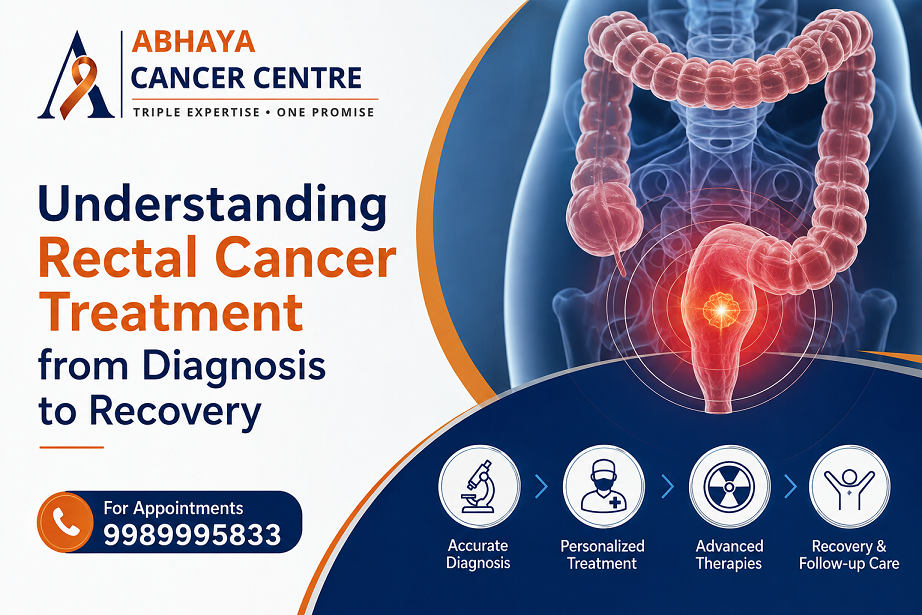
A rectal cancer diagnosis can feel overwhelming, but modern advancements in oncology have made care more precise, effective, and manageable than ever before. Understanding what lies ahead from initial diagnostic evaluation to targeted therapy and post-treatment recovery empowers you to make confident decisions about your health. At Abhaya Cancer Centre, we believe that personalized, compassionate care within your local community makes a vital difference in your healing journey. If you or a loved one is seeking comprehensive Rectal Cancer Treatment, this guide walks you through every stage of care, outlining the key steps, specialized therapies, and multidisciplinary expertise needed for the best possible outcome. What Is Rectal Cancer? Rectal cancer originates in the tissues of the rectum, which makes up the final few inches of the large intestine. Because of its location in the pelvic area near critical nerves and organs, treatment requires careful planning and a coordinated approach among surgical, medical, and radiation specialists to remove the tumor while preserving organ function and bowel control. Common Signs & Symptoms to Watch For Early detection significantly improves treatment outcomes. Consult a doctor if you experience: The Journey: Diagnosis to Recovery Navigating cancer care involves structured phases designed to evaluate tumor stage, treat the cancer effectively, and support long-term wellness. 1. Accurate Diagnosis & Staging Comprehensive diagnosis is the foundation of any successful treatment plan. It typically includes: 2. Tailored Treatment Options Rectal cancer care rarely relies on a single method. Instead, an integrated, multi-modality protocol is standard: For individuals residing in East Hyderabad, accessing world-class Rectal Cancer Treatment in Vanasthalipuram eliminates the strain of long-distance commutes during multi-week radiation or chemotherapy schedules. 3. Rehabilitation and Follow-Up Care Recovery extends beyond the operating room and radiation suite. Structured post-treatment care includes dietary guidance, pelvic floor rehabilitation, routine CEA blood tests, and periodic scans to monitor your health and ensure lasting remission. Choosing the Best Cancer Doctor in Vanasthalipuram means placing your health in the hands of seasoned experts who prioritize organ preservation, minimal side effects, and enhanced quality of life. Frequently Asked Questions (FAQs) Can rectal cancer be treated without a permanent colostomy? Yes. Thanks to modern neoadjuvant therapies (pre-operative radiation and chemotherapy) combined with advanced sphincter-sparing surgical techniques, many patients avoid a permanent stoma and retain natural bowel function. How long does rectal cancer treatment typically take? The timeline varies depending on the stage. A combined regimen of pre-operative chemoradiation, followed by surgery and recovery, and optional adjuvant chemotherapy generally spans across several months. Why is radiation therapy crucial in rectal cancer? Pre-operative radiation significantly shrinks the tumor, lowers the rate of local pelvic recurrence, and makes complete surgical excision much easier and safer. Reclaim Your Health with Expert, Compassionate Care You do not have to travel far to receive comprehensive, evidence-based rectal cancer care. At Abhaya Cancer Centre, our senior oncology specialists provide precise diagnostics, advanced radiation techniques, and individualized surgical treatment right in your neighborhood. Let our dedicated team stand by your side every step of the way toward recovery. Visit Us or Book an Appointment Clinic Address:H. No:- 6, 4-331/1WP, Plot no 28, near Red tank, CBI Colony, Phase 4, Sachivalaya Nagar, Vanasthalipuram, Hyderabad, Telangana 500070Phone: +91 9989995833Email: abhayacancercentre@gmail.com
How to Choose the Best Cancer Specialist Doctors in Vanasthalipuram, Hyderabad
A cancer diagnosis brings emotional and physical challenges, making the choice of your care team one of the most critical decisions you will ever make. Finding top-tier oncology care close to home provides comfort, reduces travel stress, and ensures timely treatment. When searching for the Best Cancer Doctors in Vanasthalipuram, Hyderabad you need a team that combines clinical excellence, cutting-edge technology, and compassionate support under one roof. At Abhaya Cancer Centre, we guide you through the key factors to evaluate when choosing oncology specialists and explain how a multidisciplinary approach offers you the best path to recovery. Key Factors in Choosing a Cancer Specialist Selecting the right specialist involves more than just a quick online search. Consider these essential criteria to ensure you receive expert care: Core Specialists You Need on Your Care Team Comprehensive cancer care relies on three core pillars of oncology working in harmony. 1. Expert Surgical Care Surgery is often the primary step to remove tumors safely. Consulting an experienced Surgical Oncologist in Vanasthalipuram ensures precise tumor resection for head and neck, breast, gastrointestinal, thyroid, and gynecological cancers (uterus, ovary, cervix). When surgical intervention requires minimal downtime and high precision, working with a skilled Robotic Surgeon in Vanasthalipuram allows for complex laparoscopic and robotic-assisted procedures that preserve healthy surrounding tissue and speed up healing. 2. Comprehensive Medical Oncology Medical oncology focuses on systemic treatments designed to destroy cancer cells, prevent recurrence, and manage disease progression. Partnering with a dedicated Medical Oncologist in Vanasthalipuram gives you access to tailored chemotherapy regimens, targeted therapies, and personalized treatment schedules designed to maintain your quality of life. 3. Precision Radiation Therapy Advanced radiation techniques destroy targeted tumor cells while shielding nearby healthy organs. Guidance from an expert Radiation Oncologist in Vanasthalipuram ensures access to modern delivery techniques such as External Beam Radiotherapy (EBRT), RapidArc, IMRT, IGRT, 3D CRT, SBRT, SRS, SRT, HDR Brachytherapy, and DIBH with Respiratory Gating. 4. Treatment Services at Abhaya Cancer Centre At Abhaya Cancer Centre, we offer a full spectrum of oncological services tailored to each patient’s journey: Surgical Oncology – Head & Neck, Breast, GI, Thyroid, Gynecological, Minimal Access & Robotic Surgeries. Medical Oncology – Chemotherapy, Targeted Therapy, Cancer Screening & Preventive Counselling. Radiation Oncology – RapidArc, IGRT, IMRT, 3D CRT, DIBH, SBRT/SRS/SRT, HDR Brachytherapy. Frequently Asked Questions (FAQs) Why is a second opinion important before starting cancer treatment? A second opinion confirms your initial diagnosis, explores all surgical and non-surgical alternatives, and ensures you feel completely confident in your chosen treatment path. At Abhaya Cancer Centre, we offer comprehensive second-opinion consultations. What is the advantage of receiving cancer care locally in Vanasthalipuram? Cancer treatments like chemotherapy or radiation require multiple visits over weeks or months. Localized care reduces travel fatigue, provides quick emergency access, and keeps you close to your family support system. What cancer screening services are available? We offer comprehensive cancer screening and preventive counseling to detect early warning signs for breast, cervical, head and neck, and gastrointestinal cancers, significantly improving long-term outcomes. Take the First Step Toward Healing You don’t have to navigate a cancer diagnosis alone. At Abhaya Cancer Centre, our senior specialists bring decades of combined experience, state-of-the-art technologies, and individualized care to help you fight cancer with confidence. Get the expert medical guidance, precise surgical intervention, and compassionate support you deserve right here in your neighborhood. Visit Us or Book an Appointment Clinic Address: H. No:- 6, 4-331/1WP, Plot no 28, near Red tank, CBI Colony, Phase 4, Sachivalaya Nagar, Vanasthalipuram, Hyderabad, Telangana 500070