
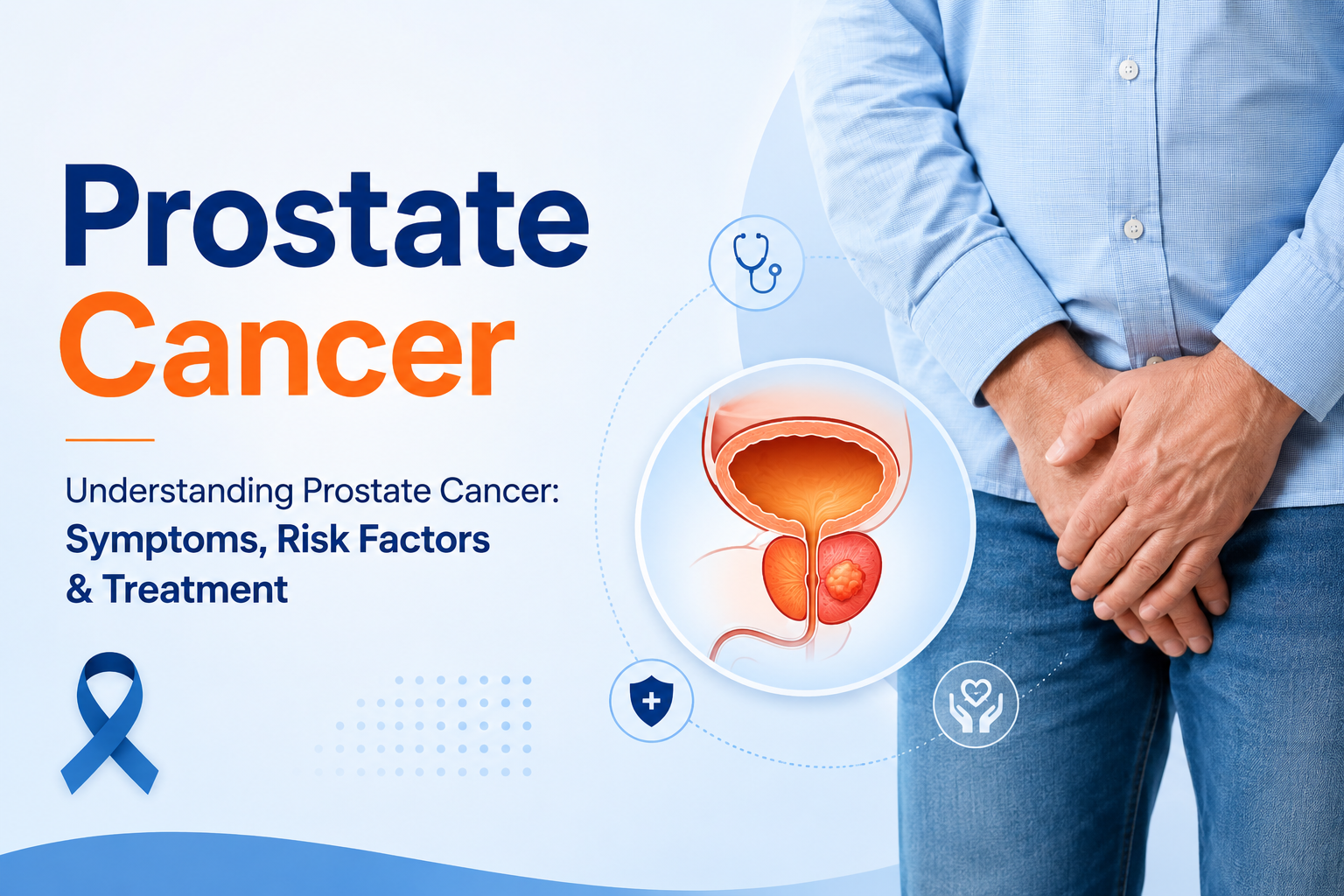
Understanding Prostate Cancer: Symptoms, Risk Factors & Treatment

Understanding Prostate Cancer: Symptoms, Risk Factors & Treatment

Have Any Questions?

Our cancer specialists are here to help you with expert guidance, diagnosis, and treatment support. Feel free to contact us for appointments and consultations.

Understanding Prostate Cancer: Symptoms, Risk Factors & Treatment

Understanding Prostate Cancer: Symptoms, Risk Factors & Treatment Introduction Prostate cancer is one of the most common cancers affecting men, especially those above the age of 50. It develops in the prostate gland, a small gland responsible for producing seminal fluid. Early detection and timely treatment can significantly improve outcomes and quality of life. What is Prostate Cancer? Prostate cancer occurs when cells in the prostate gland grow uncontrollably. While some prostate cancers grow slowly, others may spread to nearby tissues and other parts of the body if left untreated. Common Symptoms Prostate cancer may not cause symptoms in its early stages. As the disease progresses, symptoms may include: Frequent urination, especially at night Difficulty starting or stopping urination Weak urine flow Blood in urine or semen Pain or burning during urination Erectile dysfunction Pain in the hips, back, or pelvis Risk Factors Several factors may increase the risk of prostate cancer: Age above 50 years Family history of prostate cancer Obesity Unhealthy lifestyle Genetic factors Diagnosis Doctors may use the following tests to diagnose prostate cancer: PSA (Prostate-Specific Antigen) Blood Test Digital Rectal Examination (DRE) MRI Scan Prostate Biopsy PET-CT Scan Treatment Options Treatment depends on the stage and severity of the cancer: Active Surveillance Surgery (Prostatectomy) Radiation Therapy Hormone Therapy Chemotherapy Targeted Therapy Conclusion Regular screening and early diagnosis play a crucial role in the successful treatment of prostate cancer. Men above 50 should discuss screening options with their healthcare provider.

Introduction

Prostate cancer is one of the most common cancers affecting men, especially those above the age of 50. It develops in the prostate gland, a small gland responsible for producing seminal fluid. Early detection and timely treatment can significantly improve outcomes and quality of life.

What is Prostate Cancer?

Prostate cancer occurs when cells in the prostate gland grow uncontrollably. While some prostate cancers grow slowly, others may spread to nearby tissues and other parts of the body if left untreated.

Common Symptoms

Prostate cancer may not cause symptoms in its early stages. As the disease progresses, symptoms may include:

  • Frequent urination, especially at night
  • Difficulty starting or stopping urination
  • Weak urine flow
  • Blood in urine or semen
  • Pain or burning during urination
  • Erectile dysfunction
  • Pain in the hips, back, or pelvis

Risk Factors

Several factors may increase the risk of prostate cancer:

  • Age above 50 years
  • Family history of prostate cancer
  • Obesity
  • Unhealthy lifestyle
  • Genetic factors

Diagnosis

Doctors may use the following tests to diagnose prostate cancer:

  • PSA (Prostate-Specific Antigen) Blood Test
  • Digital Rectal Examination (DRE)
  • MRI Scan
  • Prostate Biopsy
  • PET-CT Scan

Treatment Options

Treatment depends on the stage and severity of the cancer:

  • Active Surveillance
  • Surgery (Prostatectomy)
  • Radiation Therapy
  • Hormone Therapy
  • Chemotherapy
  • Targeted Therapy

Conclusion

Regular screening and early diagnosis play a crucial role in the successful treatment of prostate cancer. Men above 50 should discuss screening options with their healthcare provider.

Understanding Prostate Cancer: Symptoms, Risk Factors & Treatment

Understanding Prostate Cancer: Symptoms, Risk Factors & Treatment Introduction Prostate cancer is one of the most common cancers affecting men, especially those above the age of 50. It develops in the prostate gland, a small gland responsible for producing seminal fluid. Early detection and timely treatment can significantly improve outcomes and quality of life. What is Prostate Cancer? Prostate cancer occurs when cells in the prostate gland grow uncontrollably. While some prostate cancers grow slowly, others may spread to nearby tissues and other parts of the body if left untreated. Common Symptoms Prostate cancer may not cause symptoms in its early stages. As the disease progresses, symptoms may include: Frequent urination, especially at night Difficulty starting or stopping urination Weak urine flow Blood in urine or semen Pain or burning during urination Erectile dysfunction Pain in the hips, back, or pelvis Risk Factors Several factors may increase the risk of prostate cancer: Age above 50 years Family history of prostate cancer Obesity Unhealthy lifestyle Genetic factors Diagnosis Doctors may use the following tests to diagnose prostate cancer: PSA (Prostate-Specific Antigen) Blood Test Digital Rectal Examination (DRE) MRI Scan Prostate Biopsy PET-CT Scan Treatment Options Treatment depends on the stage and severity of the cancer: Active Surveillance Surgery (Prostatectomy) Radiation Therapy Hormone Therapy Chemotherapy Targeted Therapy Conclusion Regular screening and early diagnosis play a crucial role in the successful treatment of prostate cancer. Men above 50 should discuss screening options with their healthcare provider.

Tags :

Blog
Share This :

Leave a Reply

Your email address will not be published. Required fields are marked *