Prostate Cancer
- Home
- Prostate Cancer


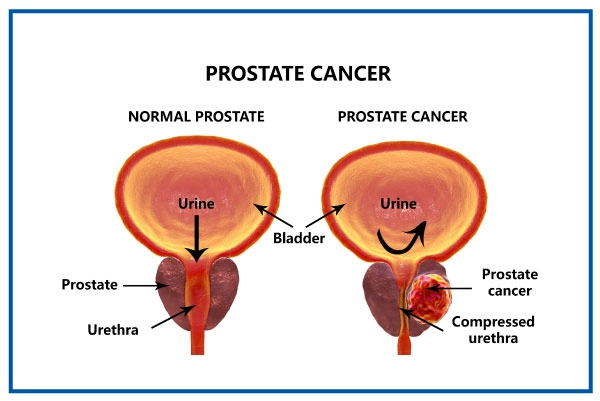
Prostate cancer is a slow-growing cancer of the prostate gland that mainly affects men over 50. It is highly treatable when caught early – the 5-year relative survival rate exceeds 99% for cancer confined to the prostate. Abhaya Cancer Centre in Vanasthalipuram, Hyderabad, offers PSA-based screening, image-guided biopsy, and a full range of treatments including surgery, radiation, and hormone therapy, tailored to the patient’s stage and overall health.
The prostate is a small, walnut-sized gland located below the bladder in men, responsible for producing seminal fluid. Prostate cancer develops when cells in this gland grow uncontrollably. It is one of the most common cancers in men and, in most cases, grows slowly enough that early diagnosis leads to excellent outcomes.
Not every prostate cancer behaves the same way. Some tumours stay confined to the gland for years and need only monitoring. Others grow aggressively and spread to lymph nodes, bones, or other organs if left untreated. This is why accurate staging and grading – not just a diagnosis – determine the right treatment path.
Understanding how common prostate cancer is in India helps put an individual diagnosis in context:
Early-stage prostate cancer often causes no symptoms at all. This is exactly why PSA screening matters – many cancers are caught on a routine blood test before any symptom appears.
When symptoms do appear, they typically include:
Many of these symptoms overlap with non-cancerous conditions like benign prostatic hyperplasia (BPH), so they should never be self-diagnosed. See a urologist or oncologist for proper evaluation.
Treatment depends on stage, Grade Group, age, general health, and your own preferences. Options include:
Active Surveillance: For low-risk, slow-growing cancer, doctors monitor the disease closely with regular PSA tests, MRI, and repeat biopsies — treating only if it shows signs of progression. This avoids overtreatment and its side effects.
Surgery (Radical Prostatectomy): Removal of the prostate gland, done via open, laparoscopic, or robotic-assisted techniques. Robotic-assisted surgery is associated with smaller incisions, less blood loss, and typically faster recovery compared with open surgery, though suitability depends on individual factors.
Radiation Therapy: High-energy beams (external beam radiation, including IMRT/IGRT techniques) or internal radioactive seeds (brachytherapy) are used to destroy cancer cells — either as a primary treatment or after surgery if cancer recurs.
Hormone Therapy: (Androgen Deprivation Therapy) Testosterone fuels prostate cancer growth. Hormone therapy — through medication or, less commonly, surgery — lowers testosterone levels to slow or shrink the cancer. It’s often combined with radiation for intermediate- and high-risk disease.
Chemotherapy, Targeted Therapy, and Immunotherapy For advanced or metastatic disease, or cancer that no longer responds to hormone therapy, doctors may use chemotherapy, targeted agents (including PARP inhibitors for certain genetic mutations), or radiopharmaceuticals to control disease progression and relieve symptoms.
Recovery doesn’t end when active treatment finishes. Ongoing care includes:
Located conveniently in Vanasthalipuram, Hyderabad, Abhaya Cancer Centre brings world – class oncology closer to home. We combine evidence-based protocols, state-of-the-art
diagnostic imaging, and a compassionate, patient-first approach. You do not have to
navigate this journey alone our tumor board of medical, surgical, and radiation
oncologists collaborates on every single case.
WhatsApp us